

What are the raw materials for wet wipe machines?
The main raw materials for wet wipe machines include spunlace nonwoven fabric, wet wipe liquid, packaging film, plastic caps, and labels. Among these, the basis weight, width, roll diameter, and absorbency of the nonwoven fabric directly affect the unwinding, folding, liquid dispensing, cutting, and packaging stability of the wet wipe machine.
The core raw material for wet wipe machines: Spunlace nonwoven fabric
Spunlace nonwoven fabric is the most critical substrate in wet wipe production. Common specifications are approximately 35–80 g/m², and the fibers can be polyester, viscose, or blends of different proportions. Different raw materials are not simply “the thicker the better,” but rather the basis weight, softness, absorbency, and wet strength need to be determined based on the product, such as baby wipes, disinfectant wipes, or cleaning wipes.
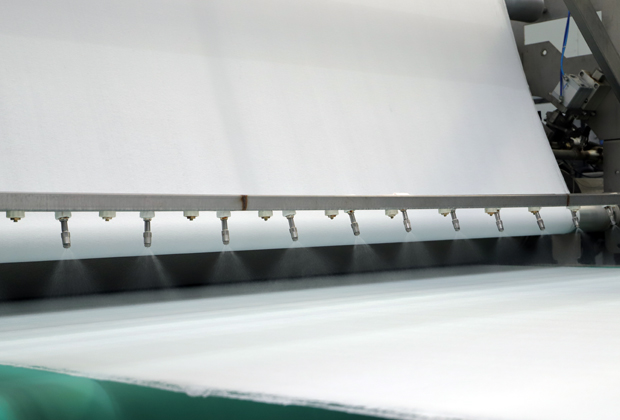
From an equipment perspective, the nonwoven fabric roll first enters the automatic unwinding system, followed by correction, tension control, slitting, folding, and length cutting. For example, some automated wet wipe production lines can process materials of 40–80 g/m², and reduce downtime caused by roll changes through multi-axis feeding and automatic receiving.
The wet wipe liquid and packaging materials determine the configuration of downstream equipment.
The wet wipe liquid typically needs to pass through a storage, filtration, metering, and online dispensing system before being evenly applied to the cut non-woven fabric. Different products use different liquid formulations, so the equipment needs to have stable flow control capabilities to maintain a relatively consistent liquid content in each wet wipe.
The packaging section mainly uses composite films with heat-sealing properties such as PET/PE, BOPP/PE, and PET/AL/PE. The production line typically performs counting, stacking, bag making, heat sealing, coding, labeling, and plastic cap installation sequentially. For pull-out wet wipes, a labeling machine and an automatic capping mechanism are also required to reduce moisture loss after the packaging is opened.
Raw material parameters should be determined before wet wipe machine selection.
In actual production, a more reasonable order is to first determine the wet wipe size, number of wipes per pack, non-woven fabric weight, roll width, folding method, and packaging film specifications, and then determine the unwinding, folding, liquid dispensing, and packaging configurations of the wet wipe machine.
Therefore, wet wipe raw materials and equipment are essentially a matching system. Stable raw material specifications can reduce the difficulty of equipment debugging, while reasonable unwinding, tension control, online liquid dispensing, and packaging design determine whether the raw materials can be stably transformed into qualified products. For companies preparing to build a wet wipe production line, determining the raw material parameters first and then configuring the machine in reverse is usually more practical than simply pursuing high speed.