Categories
News

Spunlace nonwoven fabric for wet wipes materials

In the production system of wet wipes, spunlace nonwoven fabric is the most crucial basic material. It not only determines the softness and absorbency of the wipes but also directly affects the strength and user experience of the finished product. The manufacturing of spunlace nonwoven fabric requires a complete set of high-standard, highly stable production equipment to ensure the long-term stability of the material quality.

Spunlace Nonwoven Fabric Production Line Structure

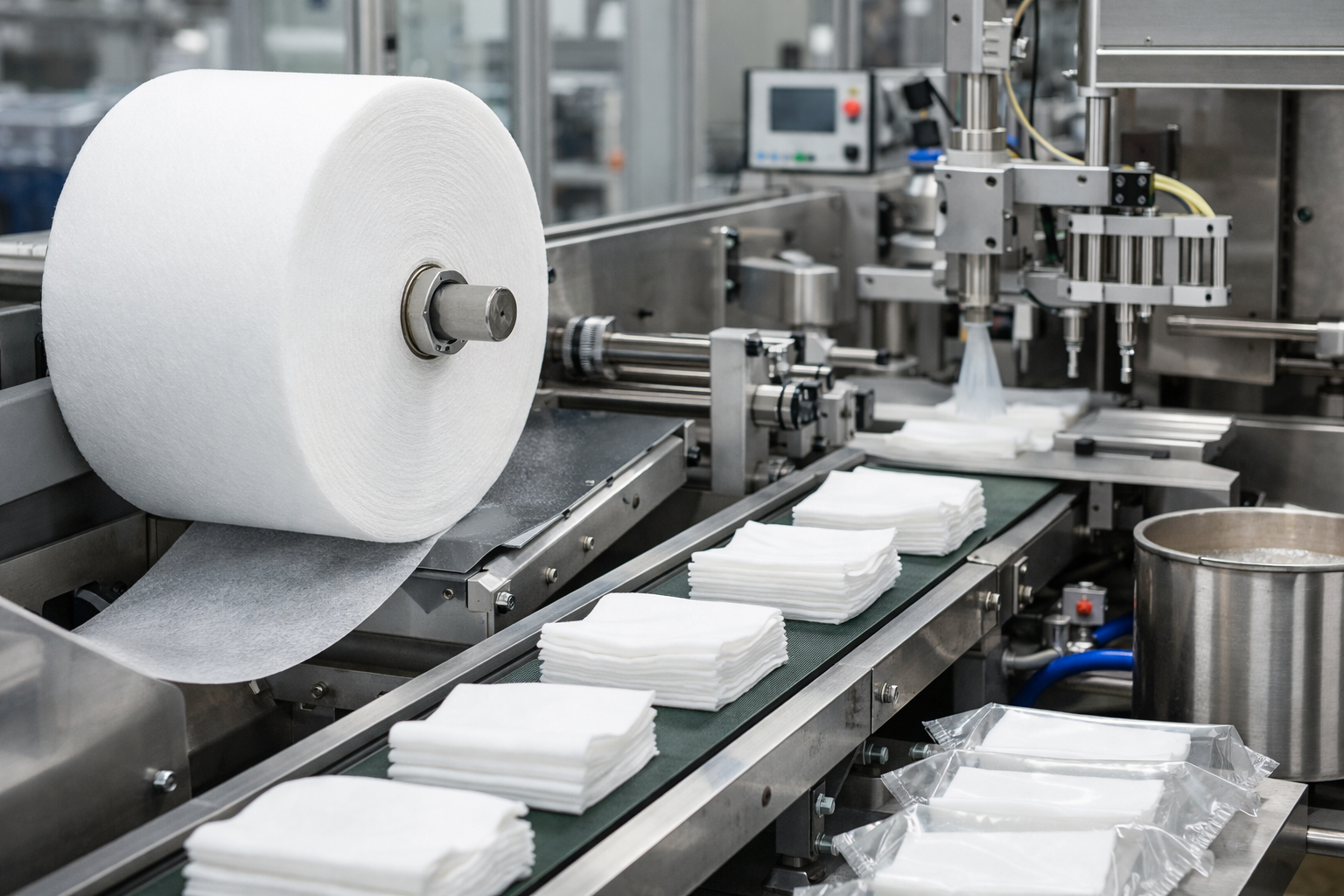
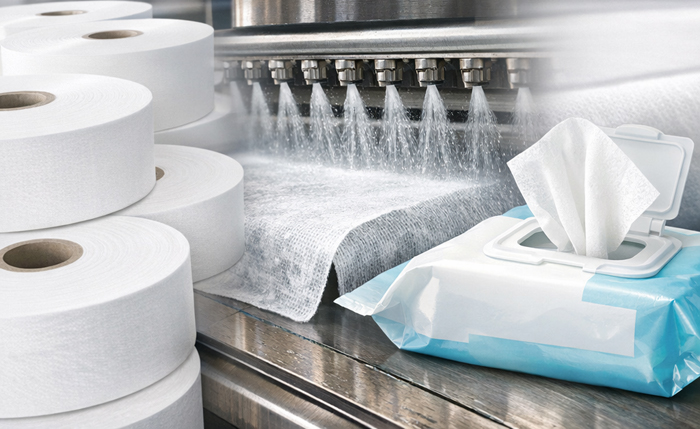
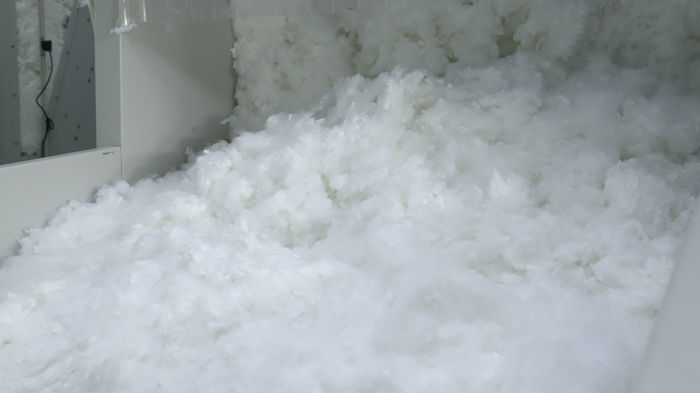
Spunlace nonwoven fabric production typically uses a fully automated production line, mainly including an opening and blending system, a carding and web-forming system, a hydroentangling reinforcement system, a drying system, and a winding device. After the raw fiber is opened and uniformly mixed, it is formed into a fiber web by a high-speed carding machine and then reinforced by a high-pressure hydroentangling device. High-pressure water jets repeatedly pierce the fiber layers, causing the fibers to entangle, thus forming a high-strength, soft-to-the-touch fabric structure without the addition of adhesives.
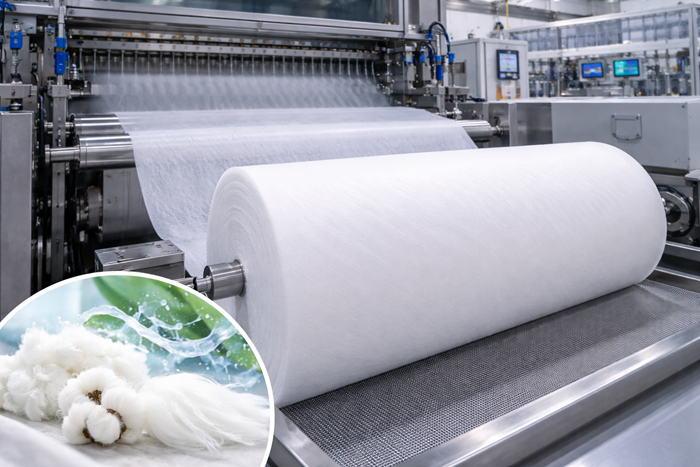
The entire production line operates at high speed and has a high degree of automation. The basis weight and width can be adjusted according to the intended use of the wet wipes to meet the needs of different products such as baby wipes, cleaning wipes, and makeup remover wipes.

Core Equipment and Technological Advantages

The spunlace machine is a key piece of equipment in the entire production line. Its high-pressure pump system and nozzle structure directly affect the fiber entanglement effect. A stable water pressure control system ensures a uniform fabric surface, free of holes and uneven strength. The accompanying multi-layer filtration and circulating water system effectively reduces water consumption and improves environmental performance.

The drying system adopts a hot air penetration structure, ensuring uniform heating of the fabric and preventing localized over-drying or uneven moisture content. An automatic tension control and online detection system monitors fabric quality in real time, reducing the defect rate and ensuring roll flatness and adaptability for subsequent processing.

Compatibility with Wet Wipe Equipment

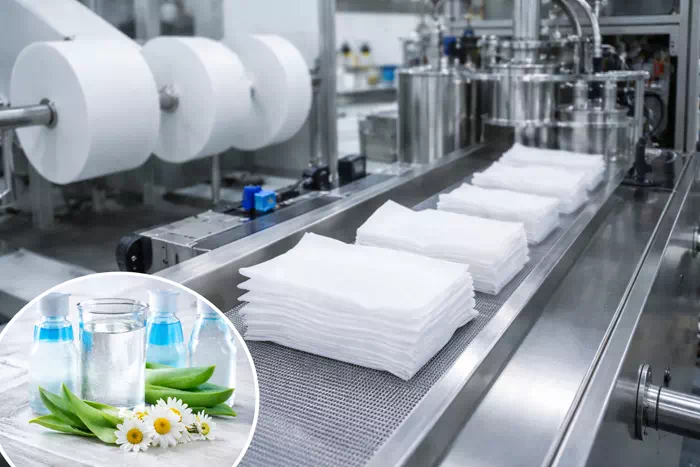
High-quality spunlace nonwoven fabric must be highly compatible with wet wipe folding machines, liquid dispensing systems, and packaging machines. A uniform liquid absorption structure facilitates precise quantitative liquid dispensing, while stable fabric strength reduces tearing or pilling problems during production, thereby improving the efficiency of the entire wet wipe production line.
Categories
News

What are the raw materials for wet wipes?

The quality of wet wipes depends not only on the formula but also closely on the selected raw materials and production equipment. A reasonable combination of materials and a stable automated production line are key to ensuring the softness, uniform liquid content, and hygiene of the wipes.

Base Material Selection and Nonwoven Fabric Feeding System

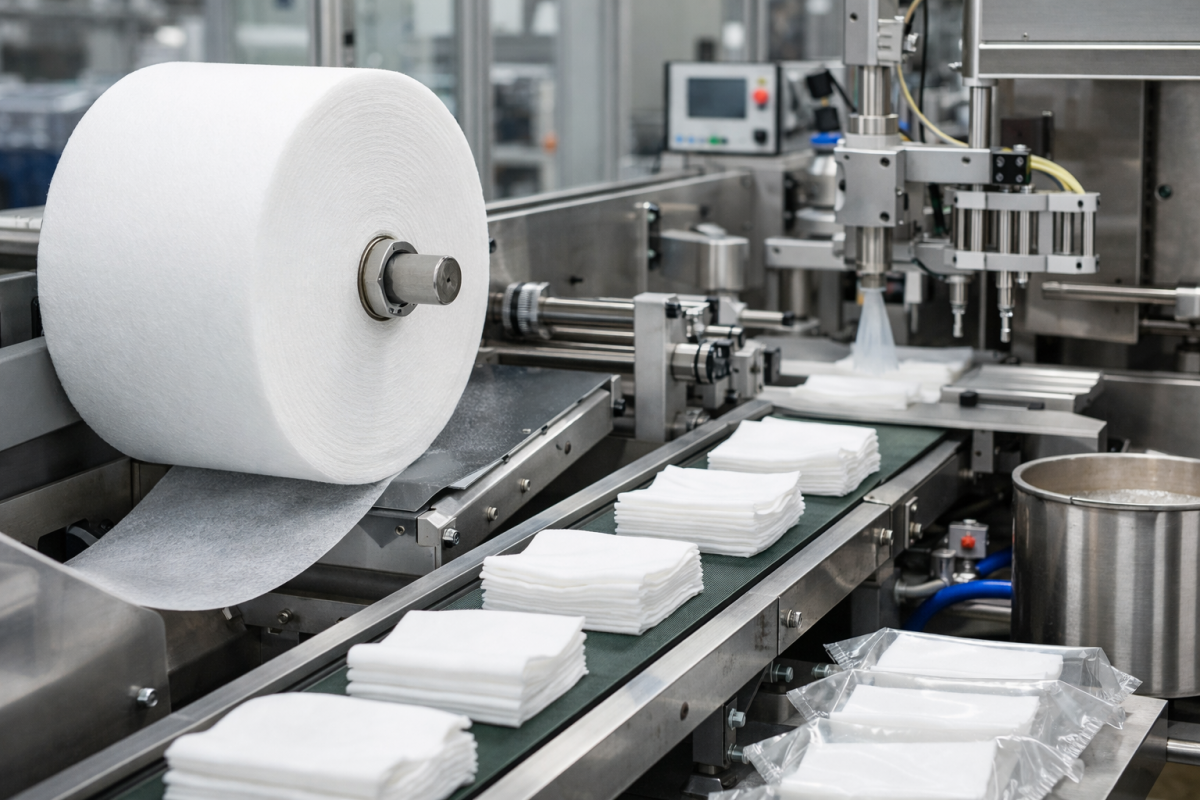
The main base material for wet wipes is nonwoven fabric, with common materials including polyester (PET), viscose fiber, wood pulp fiber, and cotton fiber. Mixing different fibers in appropriate proportions achieves a balance between strength, softness, and absorbency. Spunlace nonwoven fabric is the most widely used due to its soft touch and strong absorbency. During production, large rolls of nonwoven fabric are stably fed through an automatic unwinding and tension control system, ensuring consistent folding and cutting dimensions and providing a stable foundation for subsequent processing.

Liquid Formulation and Automatic Liquid Dispensing System

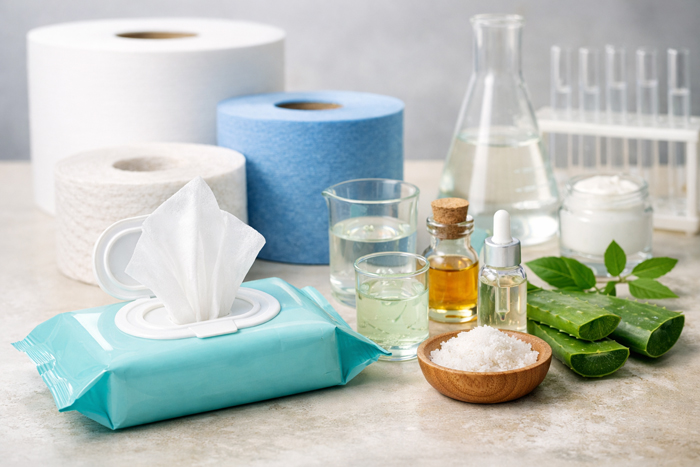
The liquid in wet wipes is typically purified water as the main component, with surfactants, humectants, preservatives, or disinfectants added depending on the intended use. To ensure uniform formulation, the production line is equipped with an automatic dispensing tank and a circulating mixing system. Using precise metering pumps and spray devices, liquid is evenly sprayed onto the non-woven fabric, ensuring a stable liquid content in each wipe and preventing over-wetness or dryness.

Integrated Molding and Packaging Production Equipment

Modern wipe production lines integrate folding, cutting, counting, stacking, packaging, and sealing into a single system, achieving fully automated operation. The equipment uses a servo control system to ensure neat folds and clean cuts, while effectively preventing moisture evaporation and secondary contamination during the sealing and packaging process. The line boasts a high degree of automation, can operate continuously and stably, significantly reducing labor costs and improving product consistency.

Categories
News

How to Choose Raw Materials for Wet Wipes?

In the production of wet wipes, the choice of raw materials not only determines the user experience but also directly affects the operational stability of production equipment and the quality of the finished product. For wet wipe manufacturers, rationally matching material properties with production processes is key to achieving efficient and stable production.

How to Choose Raw Materials for Wet Wipes?

Currently, most wet wipes on the market use spunlace nonwoven fabric as the base material. This type of material features uniform fiber distribution, strong absorbency, softness, and breathability, effectively absorbing cleaning liquids and improving user comfort. Different application scenarios have significantly different material requirements: daily cleaning wipes emphasize a balance between absorbency and cost; baby or personal care wipes prioritize softness and safety; industrial or kitchen cleaning requires materials with higher strength and abrasion resistance. Common fiber combinations include viscose and polyester blends, wood pulp composites, and natural materials such as cotton and bamboo fiber. In recent years, biodegradable and flushable materials have also gradually become a market trend. These materials often use wood pulp, viscose, or other natural fibers to meet environmental protection requirements.

High-quality materials can only realize their maximum value when paired with suitable equipment. In actual production, spunlace nonwoven fabric typically enters automated wet wipes production lines in master roll form, where stable operation is ensured by an unwinding system, tension control device, and web guiding system. It then enters the folding and cutting unit to achieve the required specifications. Different weights and fiber ratios of materials place varying demands on equipment tension, cutting precision, and folding structures; therefore, production lines usually need adjustable parameters to accommodate diverse product needs. For highly absorbent or thick materials, the equipment also requires an efficient liquid impregnation system to ensure uniform liquid distribution and avoid uneven wetting, thereby improving product consistency and quality stability.

Categories
News

How are wet wipes made?

Wet wipes may seem simple, but they are a daily necessity with extremely high requirements for materials, formulas, and processes. What truly determines product quality is not production speed, but the degree of matching of three core elements: the substrate, the wetting solution, and the packaging system. The balance between these three directly affects the user experience and market competitiveness of the wet wipes.

First is the substrate, which is the “skeleton” of the wet wipe. Currently, the industry mainstream uses non-woven fabrics, and the processes vary depending on the application. Spunlace non-woven fabrics are soft and delicate, suitable for baby and personal care products; spunbond materials have high strength and are mostly used in industrial or heavy-duty cleaning; while meltblown materials have strong liquid absorption capacity and are commonly used in disinfectant or functional wet wipes. When choosing a substrate, companies must consider not only the feel and absorbency, but also test tensile strength, basis weight, and stability to ensure reliability during production and use.

If the substrate determines the feel, then the wetting solution determines the function. Water is the main carrier, but a mature formula involves much more than that. Glycerin, aloe vera, and other moisturizing ingredients enhance comfort; humectants help lock in moisture and extend the product’s shelf life; preservatives inhibit microbial growth, ensuring safety and stability; and depending on the application, antibacterial ingredients, plant extracts, or vitamins may be added. The entire formulation process requires precise proportion control and must pass stability and safety tests.

Finally, the packaging system is often overlooked. Wet wipes are high-moisture products, and insufficient sealing will cause them to dry and become ineffective quickly. High-quality packaging not only needs good barrier properties but also a resealable design to reduce air contact. Meanwhile, portability, ease of use, and the use of environmentally friendly materials are increasingly becoming important areas of market competition.

From material selection to formulation design, and then to sealing and dispensing structures, wet wipe manufacturing is essentially a systematic project. Only by finding a balance between comfort, stability, and safety can a truly practical and marketable product be created.

Categories
News

Wet Wipes Raw Materials: Spunlaced Nonwoven Fabric

In wet wipes, the choice of raw materials directly determines the product’s feel, safety, and user experience. Spunlaced nonwoven fabric, due to its natural softness, high strength, and environmental friendliness, has become the mainstream base material for high-quality wet wipes.

Spunlaced nonwoven fabric uses viscose fiber, polyester fiber, or natural cotton fiber as its main raw materials. The fiber web is entangled and reinforced using high-pressure water jets, eliminating the need for chemical adhesives. This physical reinforcement process results in a more uniform and stable fabric structure, while avoiding chemical residues, making it safer and more skin-friendly, especially suitable for demanding applications such as baby wipes, personal care wipes, and medical wipes.

In terms of performance, spunlaced nonwoven fabric combines excellent absorbency and breathability, quickly absorbing and evenly releasing liquid from wet wipes. It is less prone to linting and tearing during use. Its soft and delicate surface feel is close to that of natural fabrics, significantly improving user comfort. Furthermore, by adjusting the fiber ratio and weight, it can meet the diverse needs of different wet wipe products in terms of thickness, strength, and cost.

From an environmental perspective, spunlace nonwoven fabrics made with biodegradable fibers are more in line with the current trend of sustainable development and help reduce environmental impact. As the wet wipes market develops towards high-end, functional, and green products, spunlace nonwoven fabrics will continue to play a core role in the raw material system, becoming an important foundation for upgrading the quality of wet wipes.

Categories
News

Embossed Fabric for Wet Wipes

In wet wipe products, the true determinant of the user experience is not the formula itself, but the structural design of the base material. Among these, embossed spunlace nonwoven fabric is becoming a key raw material choice for medium-to-high quality wet wipes due to its excellent performance and stability.

This material is typically composed of a blend of viscose and polyester fibers. Viscose provides superior liquid absorption and a soft touch, making the wet wipes more skin-friendly and comfortable to use; polyester enhances overall strength and durability, ensuring that the wipes do not tear or shed fibers during use. The rational ratio of the two fibers allows the material to possess both softness and structural stability, making it suitable for various applications such as daily care and cleaning.

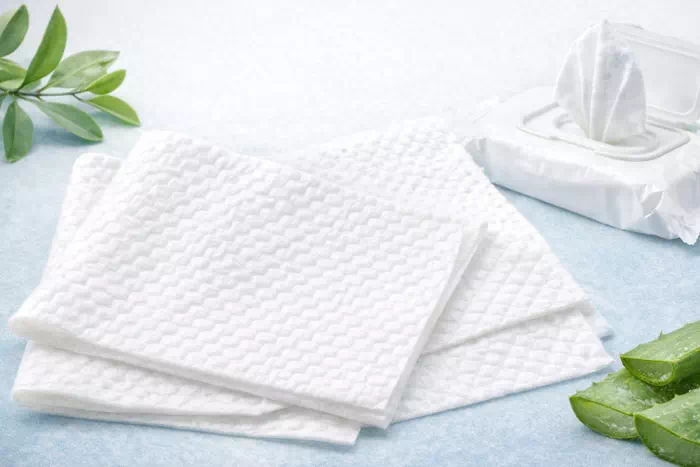
The embossed structure is the core advantage of this material. The special embossing process increases the three-dimensional feel of the surface, not only improving thickness and texture but also significantly increasing the surface area of ​​the material, allowing liquids to be absorbed and released more evenly. This texture provides moderate friction during use, improving cleaning efficiency without causing irritation or abrasion to the skin or object surfaces.

In terms of performance, the material has good wet strength, maintaining its structural integrity even in high-moisture environments, preventing tearing. At the same time, the material possesses certain environmentally friendly characteristics, meeting the current market demand for sustainable products.

In terms of application scope, embossed nonwoven fabric is not only suitable for personal care and beauty wet wipes but is also widely used in household cleaning, hotel services, industrial wiping, medical and healthcare, and electronic and cleanroom environments. Its stable performance and good adaptability make it a versatile, high-performance base material.

Overall, the difference in wet wipe quality often comes from the detailed design of the material structure. Embossed spunlace nonwoven fabric, through the optimization of fiber ratio and surface processing, achieves a balance between softness, liquid absorption, and durability, making it an important foundation for enhancing product competitiveness.

Categories
Raw Materials

The Key to Wet Wipe Production: Product Quality Starts with Raw Materials

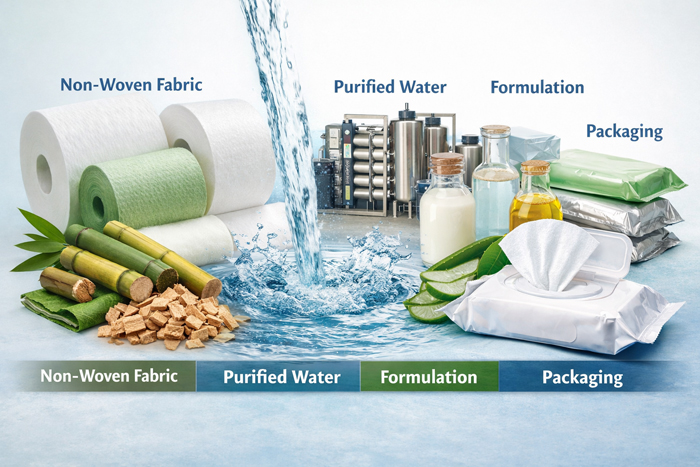
Many believe wet wipes are simply “non-woven fabric and water,” but the true determinant of product quality is the matching and control of a complete system of raw materials. From the base material and water quality to the formula and packaging, every step directly impacts the wet wipe’s feel, safety, and market positioning.

Non-woven fabric is the core material of wet wipes and the first layer of user experience. Common materials include polyester fibers, viscose fibers, or a mixture of both. Higher polyester content results in better strength and durability; a higher proportion of viscose makes the wipes softer and more absorbent. In recent years, natural materials such as bamboo fiber and wood pulp have been increasingly used in mid-to-high-end products due to their environmentally friendly and skin-friendly characteristics. Different embossing techniques, such as pearl or mesh patterns, can also improve cleaning effectiveness and feel.

Water quality is fundamental to the safety of wet wipes. Since water typically accounts for over 90% of a wet wipe’s composition, the purity of the water directly affects product stability and microbial control. The industry commonly uses reverse osmosis (RO) systems for purification, and high-standard production also incorporates EDI technology to provide more stable, high-purity water, ensuring the product is gentle and safe, suitable for infant care or those with sensitive skin.

Based on this, appropriate formulas are added according to different uses. Baby wipes emphasize low irritation and gentle care, cleaning wipes focus on stain removal, and disinfectant wipes have antibacterial functions. Mature production systems typically support customized formulas to meet different market demands.

Furthermore, packaging is equally important. Composite film materials, flip-top structures, and sealing designs determine the wet wipe’s moisturizing effect and ease of use. With increasing environmental awareness, biodegradable and recyclable packaging materials are also becoming an industry trend.

Overall, the quality of wet wipes is not determined by any single material, but rather by the overall synergy of the base material, water treatment, formula, and packaging. Only by establishing a stable and systematic raw material system can truly safe, comfortable, and competitive products be produced.

Categories
News

Wet Wipe Production: Raw Material Composition and Application Analysis

Non-woven fabric is the main raw material for wet wipes, directly determining the product’s feel, strength, and liquid absorption performance. Common materials include spunlace non-woven fabric, thermal-bonded non-woven fabric, and spunbond non-woven fabric. Spunlace non-woven fabric is widely used in baby wipes and personal care products due to its softness, skin-friendliness, and good toughness. Depending on the application, viscose fibers, polyester fibers, or a mixture of both can be chosen to balance cost, environmental friendliness, and user experience. High-quality base materials not only improve liquid retention but also prevent issues such as linting and tearing during use.

Wet Wipe Production: Raw Material Composition and Application Analysis

The liquid in wet wipes is usually based on purified water, with different functional ingredients added depending on the application. Ordinary cleaning wipes mainly contain moisturizers and mild surfactants; baby wipes emphasize being alcohol-free and non-irritating, and include skin-care ingredients such as aloe vera and glycerin; disinfectant wipes contain an appropriate amount of alcohol or antibacterial agents to achieve sterilization. A high-quality formula must not only ensure cleaning ability but also control irritation and stability, ensuring that it does not deteriorate during long-term storage while maintaining appropriate moisture levels.

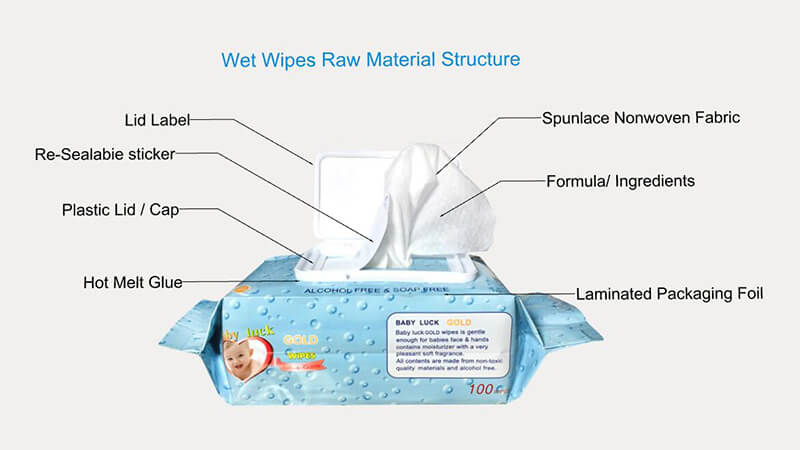
The packaging material for wet wipes is equally important. Common forms include composite film soft packaging, tub packaging, and single-piece individual packaging. Composite films usually use a multi-layer structure of PET, PE, etc., which has good sealing and anti-volatilization properties, effectively locking in moisture and extending the product’s shelf life. For wet wipes that are opened and closed repeatedly, a PP plastic lid or sticker seal is also provided to improve sealing and ease of use. High-quality packaging not only protects product quality but also enhances the overall user experience and brand image.

In summary, the quality of wet wipes is not determined by a single material, but rather by the combined effect of the base material, liquid formula, and packaging. Rational selection and optimization of raw material structure can not only improve product performance but also provide a competitive advantage in cost control and market competition.

Categories
News

How Are Wet Wipes Made

Wet wipes may look simple, but behind every soft, evenly moistened sheet is a highly integrated and automated manufacturing system. The real core of wet wipes production is not just the formula, but the machines that ensure consistency, hygiene, efficiency, and large-scale output. Modern wet wipes manufacturing lines are designed to run continuously, combining material handling, liquid preparation, fabric treatment, cutting, folding, packaging, and quality control into one streamlined process.

The production process begins with nonwoven fabric handling equipment. Large parent rolls of nonwoven material are loaded onto automatic unwinding systems equipped with tension control and edge correction devices. These systems ensure that the fabric moves smoothly and remains flat even at high production speeds. Wet wipes machines are typically compatible with various substrates, including spunlace, wood pulp composite, viscose blends, and synthetic nonwovens, allowing manufacturers to produce different types of wipes on the same line.

At the same time, the liquid preparation system operates independently but in coordination with the fabric line. Stainless steel mixing tanks are used to prepare the wet wipes solution, combining purified water with cleansing agents, moisturizers, preservatives, and optional fragrances. These tanks are fitted with heating, stirring, and filtration systems to ensure uniform mixing and hygienic conditions. Automated control panels manage temperature, mixing time, and ingredient ratios, ensuring stable formulation quality for every batch.

Once the solution is ready, the nonwoven fabric enters the impregnation section of the machine. Depending on the equipment design, the fabric is either fully immersed in the solution or evenly sprayed using precision nozzles. Advanced dosing systems accurately control the liquid content, ensuring each wipe has the same moisture level without dripping or drying out. This step is critical for product performance and user experience.

After impregnation, the treated fabric is guided into the cutting and folding section. High-speed rotary cutters divide the continuous fabric into individual wipes with precise dimensions. Automated folding mechanisms then stack the wipes according to the required format, such as Z-fold, C-fold, or interfold. These operations are synchronized to maintain speed and alignment, even during long production runs.

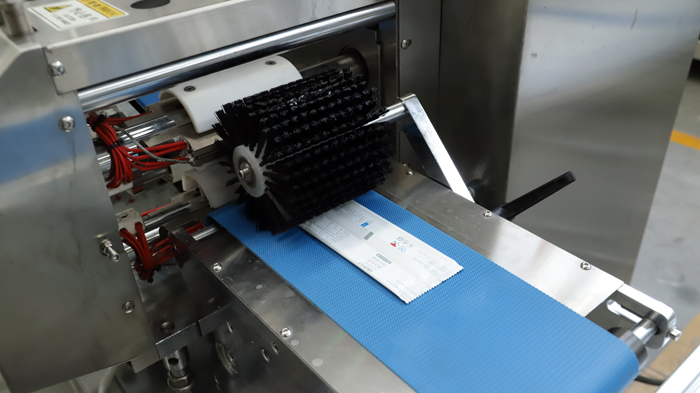
The folded wipes are then transferred to the packaging system. Depending on the product type, the machine can automatically pack wipes into flow packs, soft packs, plastic canisters, buckets, or refill pouches. Heat sealing technology ensures airtight packaging, preventing moisture loss and contamination. Many modern wet wipes machines integrate online inspection systems that monitor weight, count, seal integrity, and overall packaging quality in real time.

Finally, quality control systems play a vital role throughout the entire production process. Sensors, monitoring software, and sampling stations help detect deviations in moisture content, wipe size, or packaging integrity. Only products that meet strict standards proceed to final boxing and shipment.

In summary, wet wipes production is a machine-driven, precision-controlled process. The performance, reliability, and automation level of the manufacturing equipment directly determine the quality, efficiency, and scalability of wet wipes production, making advanced machinery the true foundation of successful wet wipes manufacturing.

Categories
News

What Are the Raw Materials Used in Wet Wipe Manufacturing Machines

In the wet wipe manufacturing process, the selection of raw materials and their compatibility with the equipment directly determine the product quality, stability, and production efficiency. Modern wet wipe manufacturing is no longer simply “fabric + liquid,” but rather a highly collaborative system of materials and automated equipment. Understanding the characteristics of the raw materials is crucial to truly leveraging the performance advantages of wet wipe production equipment.

I. Wet Wipe Substrate Raw Materials and Equipment Adaptation Logic

The core raw material for wet wipes is non-woven fabric, commonly including spunlace non-woven fabric, thermal-bonded non-woven fabric, and composite non-woven fabric. Spunlace non-woven fabric, due to its high softness, good strength, and low linting, is widely used in mid-to-high-end wet wipe products. Wet wipe production equipment is designed to configure precise unwinding systems and tension control devices based on the thickness, weight, and fiber structure of the non-woven fabric, ensuring that the substrate remains undeformed and wrinkle-free during high-speed operation, laying a stable foundation for subsequent processes.

II. Wet Wipe Liquid Formulation and Dispensing System

Wet wipe liquid typically consists of purified water, functional additives, and an appropriate preservative system. Different types of wet wipes have significantly different formulation requirements. Wet wipe manufacturing equipment uses metering pumps and spraying or immersion systems to achieve uniform liquid application. High-quality equipment can precisely control the liquid content, avoiding problems of being too wet or too dry, while also reducing liquid waste. A stable liquid delivery and filtration system effectively prevents nozzle clogging and ensures continuous production.

III. Automated Integration from Raw Materials to Finished Products

Modern wet wipe production machines not only process raw materials but also handle multiple processes such as cutting, folding, counting, and packaging. The entire process, from non-woven fabric unwinding and wetting treatment to finished product output, is completed within the equipment, reducing manual intervention and improving consistency. Through modular design, the equipment can flexibly adapt to different raw material combinations and product specifications, meeting diverse market demands.

Overall, wet wipe manufacturing is not driven by a single material, but rather the result of a deep collaboration between raw material characteristics and machinery. Only by fully understanding the raw materials and selecting wet wipe production equipment with a reasonable structure and precise control can stable, efficient, and sustainable wet wipe manufacturing be achieved.