

Wet Wipes Raw Materials: Spunlaced Nonwoven Fabric
In wet wipes, the choice of raw materials directly determines the product’s feel, safety, and user experience. Spunlaced nonwoven fabric, due to its natural softness, high strength, and environmental friendliness, has become the mainstream base material for high-quality wet wipes.
Spunlaced nonwoven fabric uses viscose fiber, polyester fiber, or natural cotton fiber as its main raw materials. The fiber web is entangled and reinforced using high-pressure water jets, eliminating the need for chemical adhesives. This physical reinforcement process results in a more uniform and stable fabric structure, while avoiding chemical residues, making it safer and more skin-friendly, especially suitable for demanding applications such as baby wipes, personal care wipes, and medical wipes.
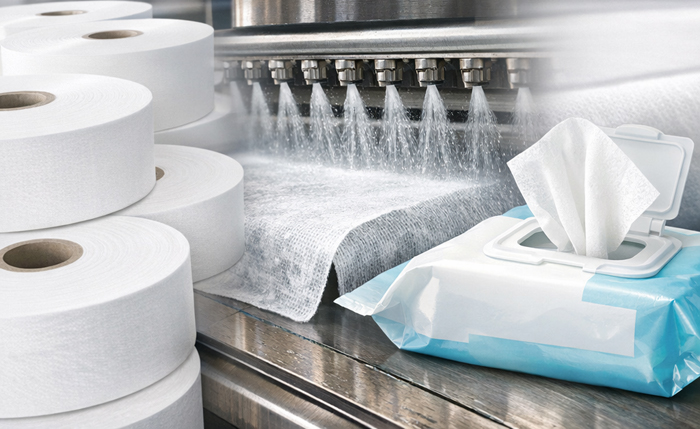
In terms of performance, spunlaced nonwoven fabric combines excellent absorbency and breathability, quickly absorbing and evenly releasing liquid from wet wipes. It is less prone to linting and tearing during use. Its soft and delicate surface feel is close to that of natural fabrics, significantly improving user comfort. Furthermore, by adjusting the fiber ratio and weight, it can meet the diverse needs of different wet wipe products in terms of thickness, strength, and cost.
From an environmental perspective, spunlace nonwoven fabrics made with biodegradable fibers are more in line with the current trend of sustainable development and help reduce environmental impact. As the wet wipes market develops towards high-end, functional, and green products, spunlace nonwoven fabrics will continue to play a core role in the raw material system, becoming an important foundation for upgrading the quality of wet wipes.