

Wet Wipes Machine Raw Materials: From Nonwoven Fabric to Finished Wipes
Wet wipes raw materials directly affect product softness, absorbency, strength, and liquid retention, while the wet wipes making machine determines how efficiently these materials are converted into finished products. Understanding material properties and machine compatibility is essential for maintaining stable production quality.
1. Common Raw Materials Used in Wet Wipes Production
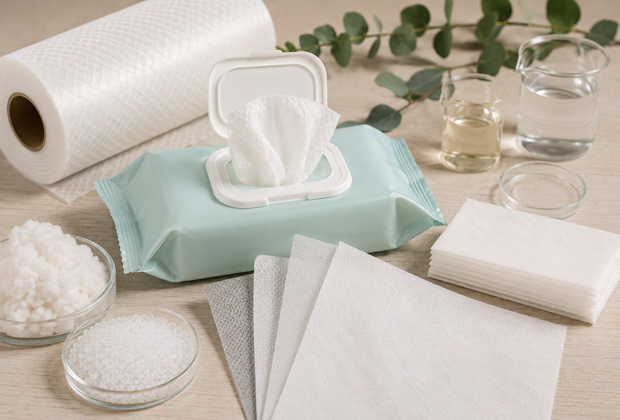
Nonwoven fabric is the primary substrate used in most wet wipes. Different fiber compositions provide different performance characteristics.
Spunlace Nonwoven Fabric: Commonly made from viscose, polyester, or a blend of both. It offers a soft texture, good absorbency, and suitable tensile strength. Typical fabric weights range from 20 to 110 GSM, depending on the product application.
Viscose Fiber: Known for its softness and water absorption, making it suitable for baby wipes, facial wipes, and personal care products.
Polyester Fiber: Provides strength and dimensional stability, helping wipes maintain their structure during folding and use.
Wood Pulp and Lyocell: Used in selected product formulations where absorbency, softness, or renewable fiber content is important.
Besides the nonwoven substrate, wet wipes also require a liquid solution containing water and other functional ingredients. The formulation varies according to the intended application, such as baby care, personal hygiene, household cleaning, or disinfecting wipes.
2. How Wet Wipes Machines Process Different Materials
A wet wipes production line integrates several operations to transform raw materials into packaged products.
Material Unwinding: The nonwoven fabric is loaded onto the unwinding unit. Tension control keeps the web stable and reduces wrinkles during continuous feeding.
Folding and Cutting: The fabric passes through a folding mechanism that creates the required wipe dimensions and folding patterns. Depending on the machine design, different configurations can produce single-fold, cross-fold, or interfolded wipes.
Liquid Application: A precision dosing system distributes the prepared solution onto the fabric. Adjustable dosing helps maintain consistent moisture levels across the product.
Counting and Packaging: The folded wipes are transferred to the packaging section, where the machine controls the required sheet quantity, film feeding, sealing, and cutting.
Different products require different machine configurations. For example, a 12-lane wet wipes machine is suitable for multi-channel production, while a small travel-pack machine is designed for compact packs containing approximately 1–10 wipes.
3. Choosing the Right Raw Materials and Equipment
Material selection should match the final product specifications rather than follow a single standard. Fabric GSM, fiber composition, roll width, thickness, and tensile strength all influence machine settings and production stability.
Before purchasing a wet wipes making machine, manufacturers should confirm the raw material specifications, target pack count, wipe dimensions, folding style, and required output. Testing the actual nonwoven fabric on the machine is also recommended to check feeding performance, folding accuracy, and liquid distribution.
Matching suitable raw materials with the correct wet wipes production equipment helps manufacturers maintain consistent product quality and improve production efficiency.