

Wet Wipes Machine Raw Materials: A Complete Guide
The main raw materials for wet wipes machines include nonwoven fabric, liquid wipes, packaging film, and plastic caps. These determine the absorbency, softness, liquid content, and packaging form of the wet wipes, and form the basis for wet wipe production line design and equipment selection.
Nonwoven fabric is the core raw material for wet wipes. According to EDANA data, the base material for wet wipes can be synthetic fibers such as polyester, polypropylene, and polyethylene, or viscose fiber, wood pulp, cotton, or a mixture of different fibers. Different fiber combinations directly affect the strength, softness, and absorbency of the wet wipes.
In actual production, spunlace nonwoven fabric, wood pulp spunlace fabric, and composite materials containing viscose fiber are commonly used. For products such as baby wipes, cleaning wipes, and disinfecting wipes, the base material specifications are not entirely the same. Therefore, the wet wipe machine needs to be adjusted according to the weight, width, thickness, and folding method of the nonwoven fabric.
The second type of raw material is the liquid wipes, which is usually water as the main component, with moisturizers, detergents, surfactants, preservatives, or other functional ingredients added depending on the product’s intended use. EDANA points out that wet wipes typically achieve their cleaning or care functions through water-based cleaning and moisturizing formulas.
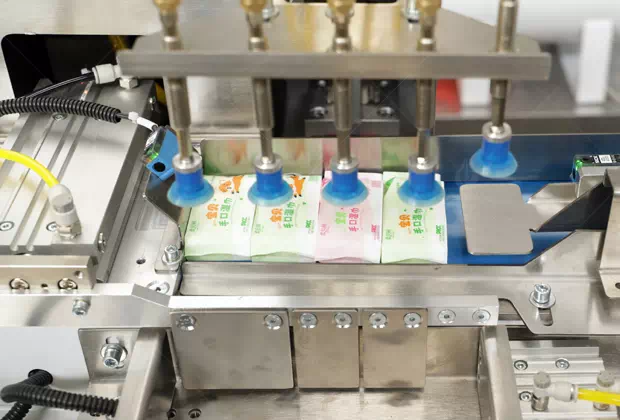
Additionally, packaging materials such as plastic composite films, bagging materials, and flap caps are included. Different packaging forms correspond to different bag-making, sealing, and capping structures.
A wet wipe machine is not simply “cutting and bagging” nonwoven fabric, but rather a continuous system that completes unwinding, folding, cutting, liquid dispensing, stacking, packaging, and sealing.
At the start of production, the unwinding device stably conveys the nonwoven fabric roll to the folding mechanism; after the folding size is determined, the cutting mechanism cuts the wet wipes to the set length. Subsequently, the liquid dispensing system evenly adds liquid to the fabric through a storage tank, a pump, and a spray or metering dispensing structure.
Here is an easily overlooked issue: changes in raw materials directly affect equipment parameters. For example, nonwoven fabrics with high absorbency require more precise control of the liquid dispensing amount; otherwise, uneven moisture content can easily occur. Materials of different thicknesses and fiber structures may also require adjustments to the conveyor speed, cutter pressure, and folding parameters.
After liquid addition, the stacking mechanism neatly arranges the individual wipes according to a set quantity before they enter the packaging station. Automated production lines are typically also equipped with bag making, horizontal sealing, vertical sealing, bag cutting, and plastic cap lamination equipment to complete the finished product packaging.
From an equipment perspective, the stability of the wet wipe raw materials is just as important as the stable operation of the production line. The width of the nonwoven fabric roll, the number of joints, thickness variations, and roll tension all affect the unwinding and folding effects.
Therefore, a truly efficient wet wipe production line should achieve a harmonious match between “raw material characteristics—product specifications—equipment structure—production parameters,” rather than solely pursuing the theoretical speed of a single machine. For companies planning to invest in wet wipe production projects, determining the raw materials and product specifications first, and then configuring the unwinding, folding, liquid addition, cutting, stacking, and packaging equipment based on production capacity, is generally more conducive to controlling actual production costs and ensuring equipment operational stability.