

Wet Wipes and Raw Materials: Production Process from Nonwoven Fabric to Finished Wet Wipes
Wet wipes are cleaning products made primarily from nonwoven fabric through processes such as liquid addition, folding, slitting, and packaging. They are widely used in personal care, household cleaning, baby care, food service, and healthcare. The quality of wet wipes depends not only on the production equipment but also closely on the selection of raw materials and processing techniques.
The base material for wet wipes is typically spunlace nonwoven fabric, with a common basis weight of 20–110 g/m². Depending on the product application, viscose fiber, polyester, wood pulp fiber, or lyocell fiber can be selected. Viscose fiber has good liquid absorption, polyester helps improve material strength, wood pulp fiber is suitable for some cost-effective products, and lyocell fiber is often used for wet wipes emphasizing a soft touch.
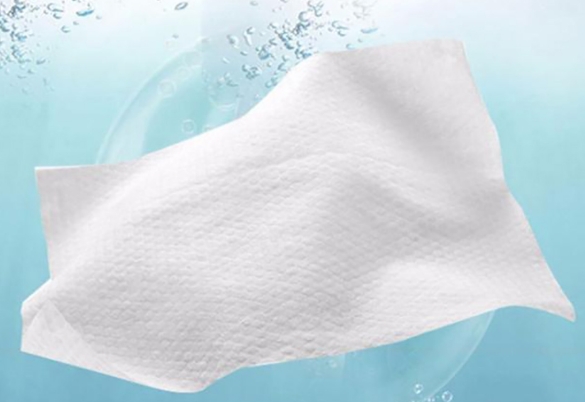
In addition to the base material, production also requires purified water, wet wipe liquid suitable for the product application, and packaging film. The liquid absorption capacity, tensile strength, and thickness of the raw materials directly affect the stability of subsequent folding, conveying, and packaging.
Automatic wet wipes machines typically consist of an unwinding system, a folding mechanism, a quantitative dispensing device, a cutting mechanism, and a packaging system. After the non-woven fabric is unwound from the roll, it undergoes multiple folds and precise dispensing, is then cut to the set dimensions, and finally packed into bags and sealed.
Different products require different equipment. For example, individually packaged wet wipes are suitable for high-speed, multi-row production lines, while family-sized wet wipes usually use multi-channel folding and packaging equipment. Production speed, folding dimensions, and the number of wipes per pack should all be configured according to order requirements.
Only by rationally selecting raw materials and wet wipe production equipment can product quality, production efficiency, and material utilization be balanced to meet the wet wipe manufacturing needs of different markets.