

Wet Wipes Machine Raw Materials and Production Process
The main raw materials for wet wipe production lines include spunlace nonwoven fabric, wet wipe liquid, packaging film, and plastic caps. Automated production equipment processes these raw materials into wet wipes of different specifications through unwinding, folding, liquid addition, cutting, and packaging. The properties of the raw materials and the parameters of the equipment directly affect production efficiency and finished product quality.
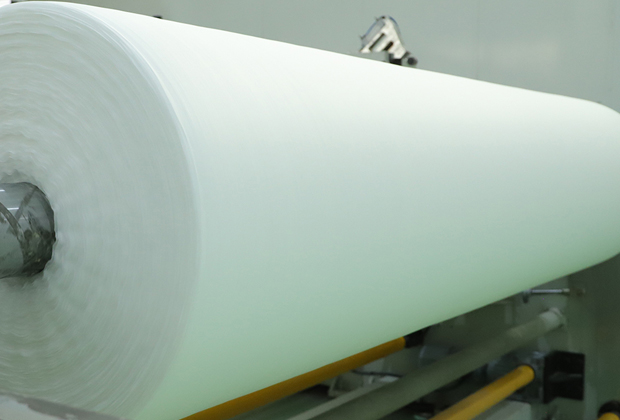
Spunlace nonwoven fabric is the core material in wet wipe production. Commonly used fibers include viscose, polyester, wood pulp, and lyocell, with a basis weight typically ranging from 20 to 110 g/m². Viscose fibers have good liquid absorption, while polyester helps improve wet strength. Different products require appropriate material combinations; simply increasing the basis weight cannot improve wet wipe quality.
Wet wipe liquid is usually based on purified water, with humectants, cleaning agents, and preservatives added depending on the product’s intended use. Packaging materials include composite packaging films, plastic caps, and labels, the thickness, width, and heat-sealing performance of which need to be matched with the packaging equipment.
Automatic wet wipe production lines first transport the nonwoven fabric through an unwinding system, using web guiding and tension control devices to maintain stable material flow. Subsequently, the folding mechanism performs Z-folds, C-folds, and other processing methods according to the product dimensions, and then the fixed-length cutting mechanism cuts the wet wipes.
The liquid dispensing system controls the liquid distribution of the wet wipes through spraying or quantitative liquid supply. Afterwards, the equipment completes counting, stacking, and packaging. For packs of 5–30 wipes, the machine needs to simultaneously adjust the folding size, cutting length, stacking quantity, and packaging bag specifications.
When selecting a wet wipe machine, the nonwoven fabric basis weight, roll width, wet wipe size, packaging quantity, and finished product form should be determined first, and then the corresponding unwinding, folding, liquid dispensing, and packaging structures should be selected.
In actual production, even if two nonwoven fabrics have the same basis weight, their thickness, absorbency, and tensile properties may differ. Therefore, equipment debugging should not only focus on theoretical speed but also on testing folding accuracy, liquid supply uniformity, cutting size, and packaging sealing effect using actual materials.
For wet wipe manufacturers, stable raw material specifications and reasonable equipment configuration are crucial for reducing material deviation, material breakage, and packaging defects.