

Wet Wipes and Raw Materials: From Fabric Selection to Finished Products
Wet wipes are disposable nonwoven products designed for personal hygiene, household cleaning, baby care, and industrial applications. Their quality depends not only on the wet wipes manufacturing machine but also on the selection of raw materials, fabric structure, liquid formulation, and production process. Choosing suitable materials and maintaining stable production conditions are essential for producing soft, durable, and evenly moistened wipes.
Nonwoven fabric is the primary material used in wet wipes production. Different fiber compositions provide different levels of softness, strength, absorbency, and biodegradability.
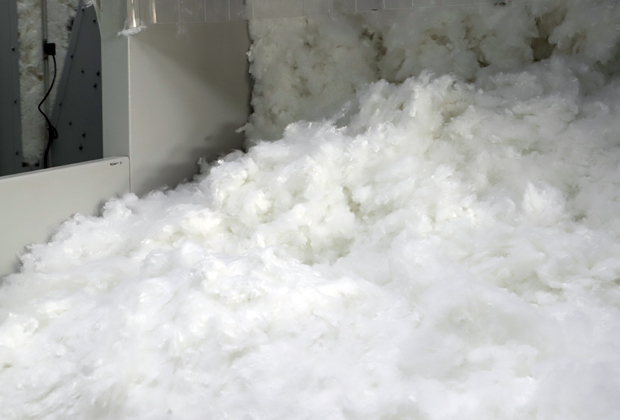
Spunlace nonwoven fabric is widely used because its fibers are bonded through high-pressure water jets without chemical adhesives. Common raw materials include:
– Viscose: Made from regenerated cellulose, offering excellent water absorption and a soft touch.
– Polyester: Provides good tensile strength and dimensional stability.
– Wood Pulp: Improves liquid absorption and is often blended with other fibers.
– Lyocell: A cellulose-based fiber known for its softness, strength, and favorable environmental profile.
– Blended Fibers: Combinations such as 70% viscose and 30% polyester balance softness, strength, and production costs.
Fabric weight generally ranges from 20 to 110 gsm, depending on the product application. Baby wipes and facial wipes usually require a softer texture, while household cleaning wipes may need greater strength and durability.
A complete wet wipes production process involves several coordinated operations. First, the nonwoven jumbo roll is installed on the unwinding system. The fabric then passes through folding units, where it is folded into the required size and configuration.
Next, a precision liquid dosing system applies the prepared solution evenly across the fabric. The moisture content must be carefully controlled because insufficient liquid reduces cleaning performance, while excessive liquid may cause leakage during packaging.
After wetting and folding, the wipes are cut into the required sheet length and transferred to the packaging section. Depending on the product type, the machine can produce single sachets, pocket wipes, travel packs, or large household packages.
Modern automatic wet wipes machines use PLC control and servo-driven systems to coordinate feeding, folding, cutting, liquid application, and sealing. Production speed and pack quantity can be adjusted according to product specifications.