

Spunlace Non-woven Fabric: The Core Material Behind Wet Wipe Quality
In the production of wet wipes, what truly determines the user experience is not the liquid formulation, but the substrate material itself. Among these substrates, spunlace non-woven fabric plays the most critical role, directly influencing the wipes’ softness, absorbency, and safety during use.
Spunlace non-woven fabric is a material created by entangling fibers together using high-pressure water jets, without relying on chemical binders. This process renders the fabric surface fluffier and softer while maintaining excellent strength and durability. Compared to standard non-woven fabrics, its tactile feel is much closer to that of cotton textiles; consequently, it is widely utilized in products where comfort is paramount—such as baby wipes and personal care wipes. More importantly, because the manufacturing process involves fewer chemical additives, the material itself is inherently safer and poses a lower risk of skin irritation.
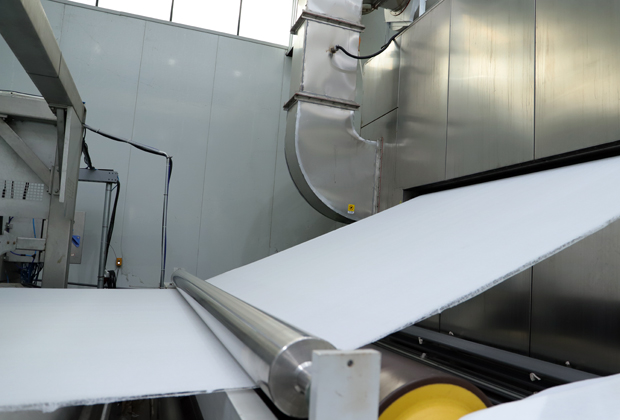
From a manufacturing perspective, spunlace non-woven fabric places higher demands on wet wipe production machinery. Its soft structure makes it more susceptible to deformation during folding, cutting, and conveying processes; if the equipment’s tension control is unstable, issues such as stretching, wrinkling, or even fabric breakage can easily occur. Therefore, high-quality wet wipe machines are typically equipped with precision tension control systems and stable feeding mechanisms to ensure the fabric maintains its structural integrity even during high-speed operation. Furthermore, spunlace fabrics of different basis weights (e.g., 40gsm vs. 60gsm) exhibit distinct differences in liquid absorption capacity and finished product thickness, requiring manufacturers to carefully match the fabric specifications to the specific positioning and requirements of the final product.
In practical application, spunlace non-woven fabric determines not only the tactile feel of the wet wipe but also its liquid-holding capacity and release performance. High-quality fabric effectively locks in moisture, releasing it gradually during use to prevent issues such as drying out instantly upon contact or dripping excessively. It is precisely these subtle details that often prove to be the decisive factor in whether an end-user chooses to make a repeat purchase.
In terms of industry trends, as environmental protection standards become increasingly stringent, biodegradable spunlace non-woven fabrics are gradually emerging as the future direction of the sector. Some manufacturers have begun incorporating natural fibers or renewable materials into their production processes, thereby reducing their environmental footprint while simultaneously maintaining high performance standards.
Ultimately, competition within the wet wipe market is not merely a contest of liquid formulations; rather, it is the result of the synergistic interplay between materials and machinery—and within this complex system, spunlace non-woven fabric stands as a fundamental element that simply cannot be overlooked.