

How Raw Materials Affect Wet Wipes Production Efficiency
In the wet wipes manufacturing process, the stable supply and compatibility of raw materials directly determine the operational efficiency of the entire production line, the quality of the finished products, and the rate of equipment wear and tear. Therefore, understanding raw material compatibility from the perspective of the machinery itself serves as a critical starting point for boosting production capacity and reducing equipment failure rates.
I. Substrate Selection and Equipment Compatibility
The core raw material for wet wipes is non-woven fabric; variations in basis weight and material composition (such as spunlace non-wovens or hot-air non-wovens) have a significant impact on equipment operation. During the design phase, machinery is typically configured with specific feeding parameters—calibrated according to the fabric’s tension, thickness, and flexibility. If there are significant fluctuations in the raw material properties, issues such as tearing, wrinkling, or uneven stacking are prone to occur.
In actual production environments, wet wipe machines featuring multi-roll synchronous unwinding structures place even higher demands on fabric consistency. High-quality non-woven fabric minimizes the need for frequent adjustments to the web guiding (edge alignment) system, thereby ensuring the stable operation of the folding module. Furthermore, properly matching the fabric width to the dimensions of the equipment’s cutting tools effectively reduces edge trim waste and maximizes the overall utilization rate of the machine.
II. Liquid Formulations and the Stability of the Liquid Application System
The liquid component in wet wipes typically consists of purified water, humectants, and small quantities of functional additives; the viscosity and flow properties of this liquid directly influence the operational status of the liquid application system. If the liquid is excessively viscous, it may lead to uneven spraying or fluctuations in pipeline pressure; conversely, if it is too thin, it may result in leakage or inconsistent liquid content within the wipes.
Modern wet wipe machines predominantly employ metering pumps or flow control systems to ensure consistent liquid saturation in every single wipe through precise measurement. During equipment operation, a stable liquid formulation helps minimize wear on the pump body and prevents clogging of the spray nozzles. Additionally, synchronizing the liquid application system with the machine’s conveying rhythm is of paramount importance; any imbalance in this timing will directly compromise the quality of the package seals and the overall appearance of the finished product.
III. The Impact of Packaging Materials on Sealing Equipment
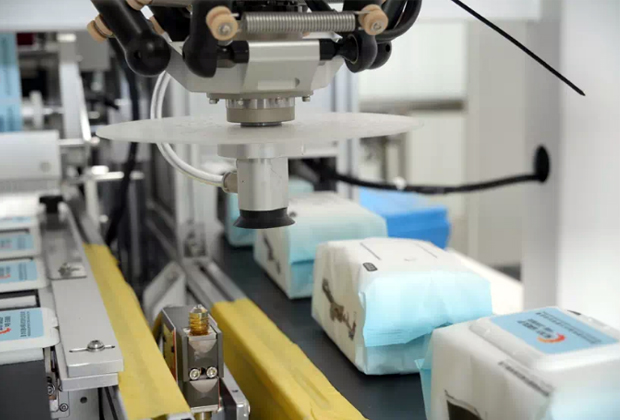
The packaging film used for wet wipes typically features a multi-layer composite structure; its thickness, heat-sealing properties, and extensibility all influence the stability of the packaging process. Heat-sealing temperature, pressure, and dwell time are critical equipment parameters; if the properties of the packaging material fluctuate significantly, it can easily lead to weak seals or excessive melting of the film. In multi-lane wet wipe machines, the packaging system is required to execute film cutting, forming, and sealing operations at high speeds; consequently, this places stringent demands on the consistency of the packaging film. High-quality packaging materials can reduce the frequency of equipment adjustments and extend continuous operating times. Furthermore, selecting a film width that is appropriately matched to the machine’s structural design helps to minimize mechanical load and prolong the service life of critical components.
Overall, the performance of a wet wipe machine does not rely solely on the equipment itself; the stability and compatibility of the raw materials are equally critical factors influencing operational efficiency. By optimizing the three key elements—non-woven fabric, liquid formulations, and packaging materials—it is possible to effectively enhance the overall stability and cost-efficiency of the production line, thereby achieving a more controllable manufacturing process.