

Raw Materials for Wet Wipes Manufacturing
Wet wipes manufacturing requires suitable nonwoven fabrics, cleaning solutions, and packaging materials to ensure consistent product quality and stable production. Choosing the right raw materials is equally important as selecting a wet wipes making machine, as material properties directly affect unwinding, folding, liquid dosing, cutting, and packaging performance.
Nonwoven fabric is the primary material used in most wet wipes. Common options include spunlace nonwoven fabric made from viscose, polyester, wood pulp, or lyocell fibers.
Viscose: Known for its softness and water absorption, making it suitable for baby wipes, facial wipes, and personal care products.
Polyester: Provides strength and dimensional stability, helping maintain fabric integrity during high-speed processing.
Viscose and polyester blends: Combine softness with tensile strength and are widely used in general-purpose wet wipes.
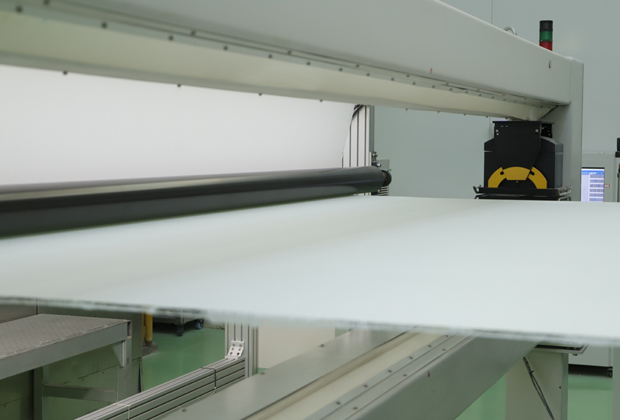
Wood pulp and lyocell: Used in selected biodegradable or plant-based wipe formulations, depending on fiber composition and product requirements.
Spunlace nonwoven fabrics commonly used in wet wipes production have basis weights ranging from approximately 20 to 110 g/m². The appropriate weight depends on the intended application, sheet size, and desired thickness.
Another essential component is the liquid formulation. Depending on the product, it may contain purified water, moisturizing ingredients, cleansing agents, preservatives, and other functional additives. The formulation must be compatible with the fabric and comply with applicable product safety requirements.
Raw material characteristics directly influence machine configuration and operating parameters. A wet wipes production line typically includes a nonwoven fabric unwinding system, folding unit, liquid application system, cutting mechanism, and automatic packaging machine.
Fabric thickness, elasticity, and tensile strength affect unwinding tension and folding accuracy. Materials with inconsistent thickness or poor strength may cause wrinkles, web breaks, or inaccurate sheet positioning.
Liquid dosing also requires careful adjustment. The pump system must deliver a consistent amount of solution to each sheet or stack. Excessive liquid can affect packaging and sealing, while insufficient dosing may result in uneven moisture distribution.
For this reason, manufacturers should test the actual nonwoven fabric and liquid formulation before finalizing machine settings.