

Raw Materials and Production Process for Wet Wipes Manufacturing
The primary raw materials for wet wipes include spunlace nonwoven fabric, purified water, a liquid formulation (wet wipe solution), and packaging film. Through a series of automated processes—such as unwinding, folding, cutting to specific lengths, precise liquid application, and sealed packaging—these materials are converted into wet wipes designed for various sizes and applications. The selection of raw materials and the configuration of the production equipment directly influence production speed, product quality, and the stability of the finished goods.
1. Main Raw Materials for Wet Wipes Production
Spunlace nonwoven fabric is the most common substrate used in the production of wet wipes. Its basis weight typically ranges from 20 to 110 g/m², depending on the intended use and thickness requirements of the product. Common fibers used include viscose, polyester, wood pulp, and Lyocell. The specific blend of fibers affects the material’s absorbency, softness, tensile strength, and biodegradability.
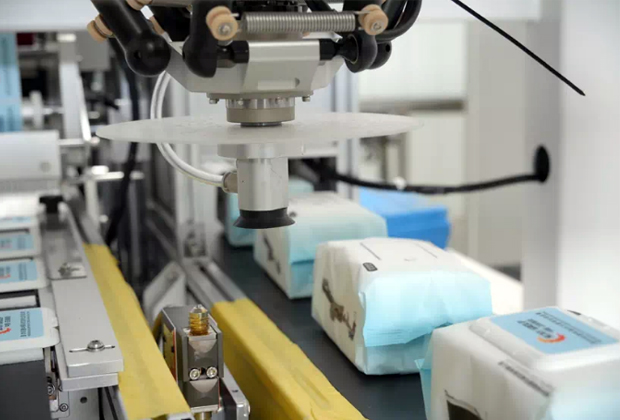
In addition, production requires treated (purified) water, a formulated wet wipe solution, and packaging materials such as polyethylene (PE) or composite films. For products like baby wipes, general-purpose cleaning wipes, or alcohol-based wipes, the liquid formulation and packaging materials must be selected according to the specific end-use.
2. How Wet Wipes Machines Process These Materials
A wet wipes production line begins by feeding the nonwoven fabric through an unwinding unit. A servo-control system regulates the feed length and operating speed, after which a folding mechanism performs longitudinal or transverse folding. Depending on the equipment configuration, the line can produce single-sheet packs, mini-packs, multi-sheet packs, or large-format bulk packs.
A liquid application system—utilizing metering pumps or precise dosing devices—ensures the wet wipe solution is applied uniformly across the fabric. Subsequently, cutting, stacking, and packaging mechanisms organize the wipes and seal them into their final packaging. Automated production lines can also be equipped with features such as visual inspection systems, automatic lid applicators, cartoning machines, and case-packing equipment.
3. Matching Raw Materials with Machine Configuration
Thicker raw materials are not necessarily better. Factors such as the basis weight of the nonwoven fabric, fiber composition, web width, and elasticity all impact unwinding tension, folding precision, and overall machine operating speed. If the material is too soft, it may shift during transport; conversely, excessive tension can cause the material to stretch or deform. Therefore, before purchasing wet wipe production equipment, you should clearly define the product dimensions, number of wipes per pack, material basis weight, packaging format, and target production capacity, and conduct trial runs using the actual materials. Properly matching the raw materials with the wet wipe machine is essential to minimize issues such as material breaks, wrinkling, and defective packaging, thereby enhancing the stability of continuous production.