

Analysis of Wet Wipe Raw Materials and Production Equipment Applications
Wet wipes are primarily composed of non-woven fabric, an aqueous solution, and packaging materials. The specific ratio of these raw materials directly influences the wipes’ absorbency, softness, and overall user experience. Meanwhile, production equipment handles processes such as material feeding, liquid impregnation, folding, cutting, and packaging to ensure stable, continuous production.
Common Raw Materials and Their Characteristics
The core material of wet wipes is non-woven fabric. Common types found on the market include spunlace, spunbond, hot-air through-bonded, and flushable non-woven fabrics.
Among these, spunlace non-woven fabric is widely used for baby wipes and personal care wipes due to its soft fibers and excellent absorbency. The fabric weight (basis weight) is selected based on product positioning, typically ranging from 35 to 80 g/m²; for instance, standard cleaning wipes often use 40–60 g/m² fabric, whereas thicker care wipes may utilize heavier materials.
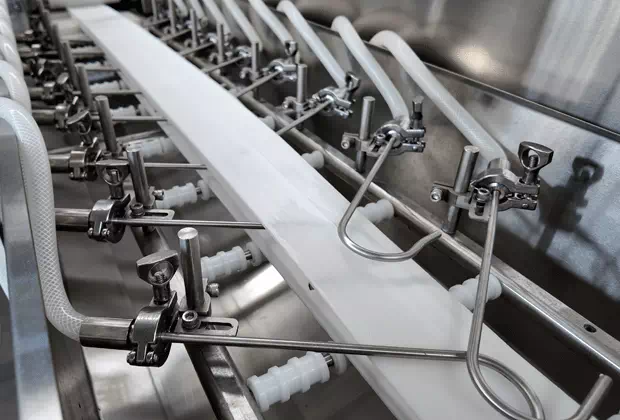
Analysis of Wet Wipe Raw Materials and Production Equipment Applications
In addition to the substrate, a liquid formulation is required. The wetting solution typically consists of purified water, humectants, a preservative system, and functional additives. Different types of wipes—such as alcohol wipes, disinfecting wipes, and baby wipes—have varying requirements regarding liquid ratios and formulations; consequently, the equipment must feature a stable liquid-dosing control system to ensure consistent moisture content across every wipe.
How Production Equipment Processes Raw Materials
The primary function of wet wipe production equipment is to transform rolls of non-woven fabric into standardized wet wipe products. The complete production process generally encompasses unwinding, folding, cutting, liquid application, stacking, and packaging.
During operation, an automatic unwinding system ensures a continuous supply of non-woven fabric, while a tension control mechanism maintains smooth material transport, preventing issues such as wrinkling or breakage. Subsequently, the folding mechanism adjusts the folding pattern according to product specifications; for example, pop-up wipes, bagged wipes, and canister wipes each utilize distinct folding configurations.
The liquid application system is a critical component of the equipment. Precise spraying or impregnation methods ensure uniform liquid distribution, minimizing issues such as localized oversaturation or insufficient moisture. High-speed production lines also require servo drive systems to enhance operational precision.
Currently, the speed of automated wet wipe production lines varies depending on the product type. For instance, equipment for small-pack wet wipes can typically achieve speeds of several dozen packs per minute, while high-speed, multi-lane production lines are capable of meeting large-scale order demands.