The quality of wet wipes depends largely on the selection of raw materials. What appears to be a simple wet wipe actually involves multiple critical components, including non-woven fabrics, liquid formulations, and packaging materials.
The core material of a wet wipe is the non-woven fabric. Common types include spunlace non-woven fabric, hot-air non-woven fabric, and wood pulp composite fabric; among these, spunlace non-woven fabric is the most widely used. It is characterized by its softness, excellent absorbency, and skin-friendly texture, making it ideal for products such as baby wipes and personal care wipes. Non-woven fabrics of different gram weights offer distinct tactile sensations and suit different applications; generally, a higher gram weight indicates greater thickness and durability.
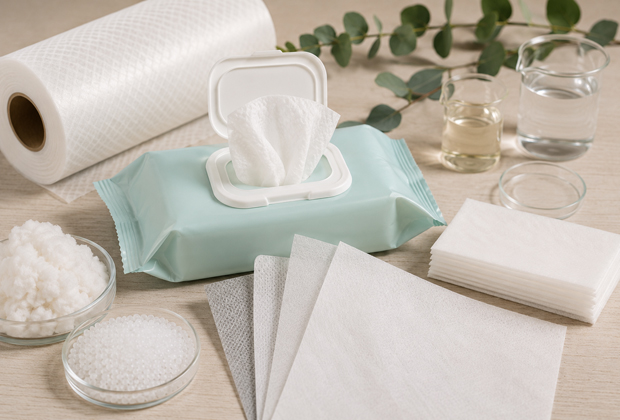
Beyond the fabric itself, the liquid formulation is equally critical. Standard cleaning wipes are primarily based on purified water, supplemented with appropriate amounts of humectants, preservatives, and cleaning agents. Baby wipes, conversely, prioritize gentleness; many products utilize EDI-purified water, plant extracts, or alcohol-free formulations to minimize skin irritation. Additionally, certain functional wipes incorporate antimicrobial agents, skincare essences, or disinfectants to cater to specific usage requirements.
Packaging materials also directly impact the preservation of wet wipes. Common packaging formats include PET-laminated pouches, aluminum foil bags, and designs featuring plastic lids. The superior the sealing performance, the more effectively it prevents moisture evaporation from the wipes, thereby extending the product’s shelf life. Particularly during high-temperature transit and long-term storage, the quality of the packaging often determines whether the wipes will dry out prematurely.
As consumer demand for eco-friendly products continues to rise, biodegradable non-woven fabrics, plant-based fibers, and plastic-free packaging are gradually emerging as new directions for the wet wipe industry. Today, the manufacturing of wet wipes has evolved beyond simple processing; it now represents a comprehensive test of materials, safety standards, and the overall user experience.