

What are wet wipes made of?
Wet wipes, as a convenient and hygienic cleaning product, are widely used in daily life, medical care, and personal hygiene. From baby care to food cleaning, from home disinfection to travel, wet wipes are almost ubiquitous. Many people use wet wipes daily, but few know what materials they are made of. In fact, a seemingly simple wet wipe typically consists of two main parts: a base material and a liquid formula.
The main base material of wet wipes – non-woven fabric
The core material of wet wipes is non-woven fabric, which is the “body” of the wipe. Currently, the most common type on the market is spunlace non-woven fabric. This material uses high-pressure water jets to interweave fibers to form a fabric-like structure, eliminating the need for traditional textile processes. Therefore, it is soft, highly absorbent, and strong.
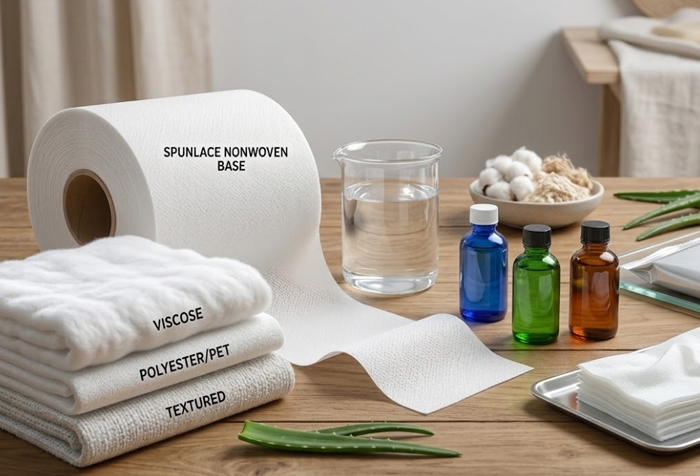
Spunlace non-woven fabric is usually made from viscose fiber, polyester fiber, or a blend of both. Viscose fiber comes from natural plant fibers, has a soft touch, and is skin-friendly, often used in baby wipes or nursing wipes; while polyester fiber has better strength and durability, and is mostly used in cleaning wipes or industrial wipes. Different types of wipes have their fiber ratios adjusted according to needs to achieve the desired effect.
Liquid Formula Ingredients in Wipes
In addition to the non-woven fabric base, wipes also contain a certain proportion of liquid ingredients. Water is the main component of the liquid in wipes, generally making up the largest proportion, and is used to maintain moisture and clean. In addition, small amounts of functional ingredients, such as moisturizers, antibacterial agents, or plant extracts, are added.
For example, baby wipes usually contain mild moisturizing ingredients, such as glycerin or aloe vera extract, to reduce skin irritation; while cleaning wipes or disinfecting wipes may contain appropriate amounts of alcohol or antibacterial ingredients to enhance cleaning and disinfection effects. The combination of different formulas allows wipes to meet diverse usage needs.
Packaging Materials and Overall Structure
To ensure the hygiene and moisture retention of wipes during storage and use, they also require sealed packaging materials. Common packaging materials include composite plastic films, aluminum-plastic composite bags, or lidded plastic packaging. These materials have good sealing and moisture-proof properties, effectively preventing moisture evaporation and extending the shelf life of the wipes.