

What Are the Raw Materials Used in Wet Wipe Manufacturing Machines
In the wet wipe manufacturing process, the selection of raw materials and their compatibility with the equipment directly determine the product quality, stability, and production efficiency. Modern wet wipe manufacturing is no longer simply “fabric + liquid,” but rather a highly collaborative system of materials and automated equipment. Understanding the characteristics of the raw materials is crucial to truly leveraging the performance advantages of wet wipe production equipment.
I. Wet Wipe Substrate Raw Materials and Equipment Adaptation Logic
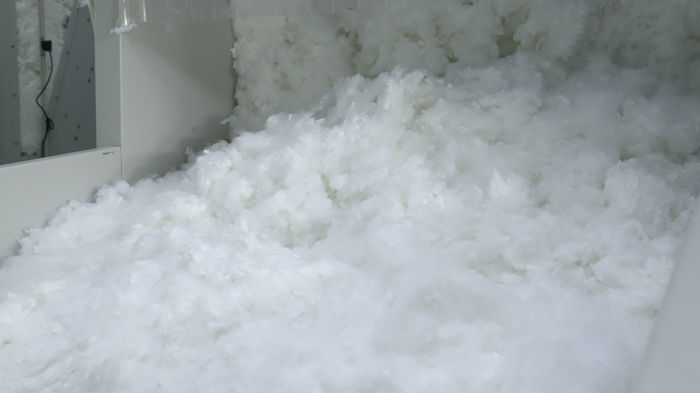
The core raw material for wet wipes is non-woven fabric, commonly including spunlace non-woven fabric, thermal-bonded non-woven fabric, and composite non-woven fabric. Spunlace non-woven fabric, due to its high softness, good strength, and low linting, is widely used in mid-to-high-end wet wipe products. Wet wipe production equipment is designed to configure precise unwinding systems and tension control devices based on the thickness, weight, and fiber structure of the non-woven fabric, ensuring that the substrate remains undeformed and wrinkle-free during high-speed operation, laying a stable foundation for subsequent processes.
II. Wet Wipe Liquid Formulation and Dispensing System
Wet wipe liquid typically consists of purified water, functional additives, and an appropriate preservative system. Different types of wet wipes have significantly different formulation requirements. Wet wipe manufacturing equipment uses metering pumps and spraying or immersion systems to achieve uniform liquid application. High-quality equipment can precisely control the liquid content, avoiding problems of being too wet or too dry, while also reducing liquid waste. A stable liquid delivery and filtration system effectively prevents nozzle clogging and ensures continuous production.
III. Automated Integration from Raw Materials to Finished Products
Modern wet wipe production machines not only process raw materials but also handle multiple processes such as cutting, folding, counting, and packaging. The entire process, from non-woven fabric unwinding and wetting treatment to finished product output, is completed within the equipment, reducing manual intervention and improving consistency. Through modular design, the equipment can flexibly adapt to different raw material combinations and product specifications, meeting diverse market demands.
Overall, wet wipe manufacturing is not driven by a single material, but rather the result of a deep collaboration between raw material characteristics and machinery. Only by fully understanding the raw materials and selecting wet wipe production equipment with a reasonable structure and precise control can stable, efficient, and sustainable wet wipe manufacturing be achieved.