

Raw Materials for Wet Wipes Production
When you pull a wet wipe from its pack, it feels soft like fabric yet strong enough not to tear like paper. It stretches slightly, absorbs liquid quickly, and cleans more effectively than ordinary tissue. This unique material is not paper at all, but a type of nonwoven fabric known as spunlace, or hydroentangled nonwoven, which is the most commonly used base material in wet wipes production.
A hydroentangled nonwoven is produced through a special manufacturing process rather than traditional weaving or knitting. In simple terms, it is a fabric made by entangling fibers together using high-pressure water jets. Unlike woven textiles, nonwoven fabrics are formed directly from fibers that are laid out in a web, either randomly or in a specific orientation. The hydroentanglement process uses ultra-fine streams of water to force these fibers to twist, move, and lock together. This creates a strong and cohesive fabric without the need for chemical binders or adhesives, making it more skin-friendly and environmentally acceptable.
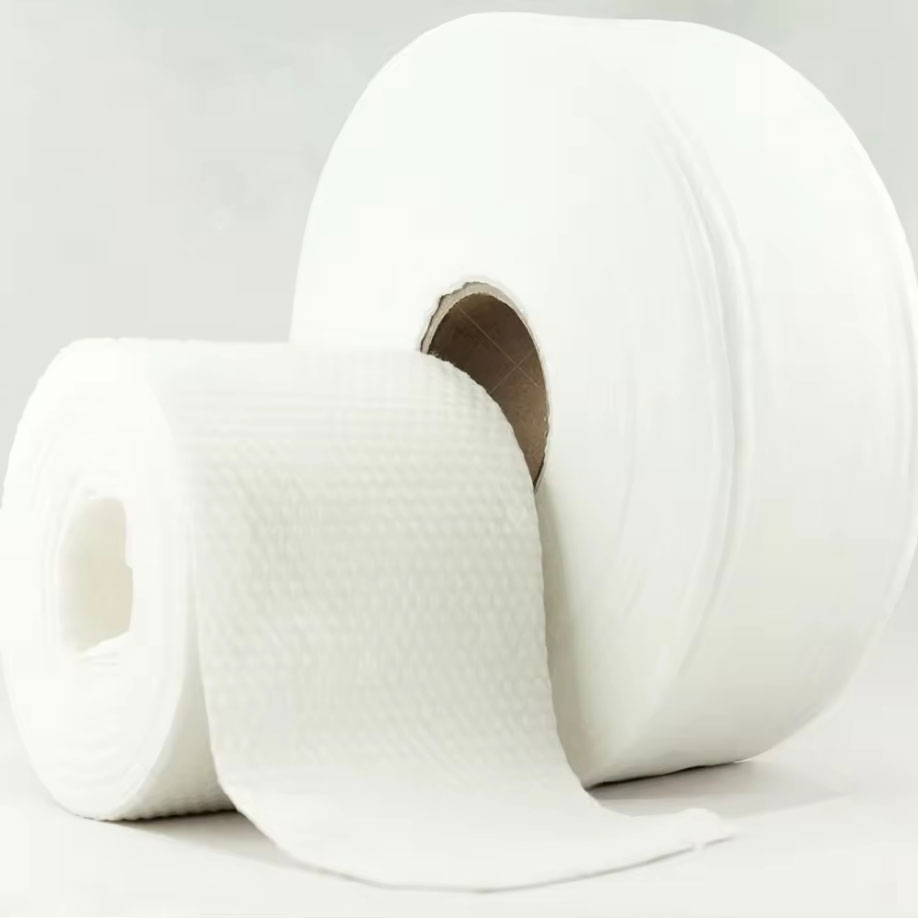
One of the biggest advantages of hydroentangled nonwovens is that the process does not damage the original properties of the fibers. The resulting fabric closely resembles traditional textiles in appearance and hand feel, while maintaining high strength, low linting, excellent absorbency, and good breathability. It is soft, flexible, drapes well, and absorbs moisture quickly, which is exactly what wet wipes require for personal care, household cleaning, and medical use.
The typical production process of spunlace nonwovens includes fiber opening and mixing, carding, web formation, drafting, hydroentanglement, drying, slitting, winding, and storage. Each step is designed to ensure uniform fiber distribution and stable fabric performance. By adjusting fiber types and ratios, manufacturers can tailor wipes for different applications, such as baby wipes, facial wipes, disinfectant wipes, or industrial wipes.
Several types of fibers are commonly used in wet wipes. Polyester (PET) and polypropylene (PP) are widely applied because of their high strength, durability, and chemical resistance. Viscose and Tencel, derived from natural wood pulp, are known for their softness, breathability, and excellent absorbency, making them ideal for skin-contact products. Wood pulp fibers provide outstanding liquid absorption and cleaning performance, while cotton fibers offer natural absorbency and effective dirt removal. In practice, wipes are rarely made from a single fiber. Blended structures such as PET and viscose are the most common, balancing strength, softness, and cost.
With growing environmental awareness, biodegradable and flushable wipes are becoming increasingly popular. These products often use viscose, bamboo fiber, wood pulp, or their combinations, allowing the wipes to break down naturally or disperse in water. While such materials are usually more expensive, they represent a sustainable direction for the wet wipes industry.
In summary, hydroentangled nonwoven fabric is the core raw material behind modern wet wipes. Through advanced water-jet technology and carefully selected fiber blends, spunlace nonwovens deliver the softness, strength, absorbency, and safety that consumers expect from high-quality wipes.