

Raw Materials for Wet Wipes?
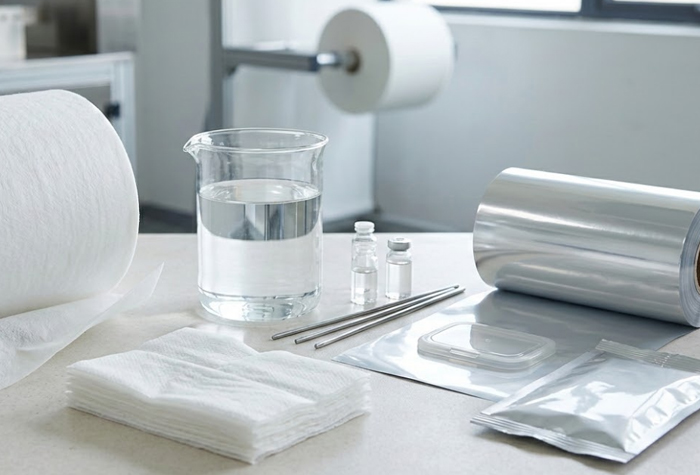
A small wet wipe typically consists of three parts: the base material, the liquid component, and the packaging material. These materials collectively determine the quality and user experience of the wet wipe.
Non-woven Fabric is the Core Material of Wet Wipes
The most important raw material for wet wipes is non-woven fabric, which is essentially the “body” of the wipe. Most wet wipes on the market currently use spunlace non-woven fabric. This material uses high-pressure water jets to interweave fibers into a fabric-like structure, eliminating the need for traditional textile processes. Therefore, it is soft, tear-resistant, and highly absorbent.
The Liquid Formula in Wet Wipes
In addition to the non-woven fabric, wet wipes also require a certain proportion of liquid solution. Water is the most important component, generally purified or deionized water, used to maintain moisture and cleaning functions. Different functional ingredients are added depending on the product’s intended use.
Packaging Materials Ensure the Quality of Wet Wipes
To maintain the moisture and hygiene of wet wipes, the packaging material is equally important. Common wet wipe packaging often uses composite plastic film or aluminum-plastic composite materials. These materials have excellent sealing and moisture-proof properties, effectively preventing moisture evaporation.
Overall, while wet wipes may seem simple, their raw materials and production structure are carefully designed. From the non-woven fabric substrate to the liquid formulation and sealed packaging, every step directly affects the product’s quality and user experience. With advancements in production technology, the materials used in wet wipes are constantly being upgraded, making them more environmentally friendly, safer, and better suited to everyday needs in the future.