

PP Plastic Lids and Caps for Wet Wipes
In the wet wipes industry, PP plastic lids, though small in size, directly impact product sealing, durability, and user experience. The key to consistently and efficiently producing wet wipe lids with precise dimensions, smooth opening and closing, and consistent appearance lies not in the material itself, but in the capabilities of the entire plastic lid molding and supporting equipment.
I. Molding Principles and Equipment Foundation of PP Wet Wipe Lids
PP wet wipe lids are typically manufactured using injection molding. The key factors are the stability of the injection molding machine and the precision of the mold. Dedicated injection molding equipment melts PP raw materials at high temperatures and injects them into the mold cavity under high pressure, forming the flip-top, snap-on, or press-on structure in a single process. Given the characteristics of wet wipe lids – thin walls, multiple structures, and frequent opening and closing – the equipment needs a precise temperature control system and stable clamping force to ensure the product does not deform or have flash, while maintaining good elasticity and fatigue resistance.
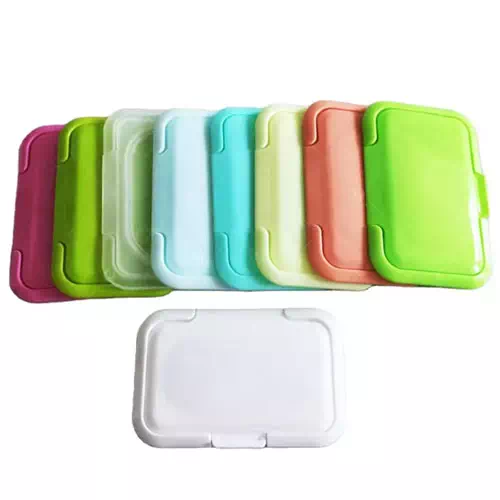
II. Core Configuration of Automated Wet Wipe Lid Production Equipment
Modern wet wipe lid production lines are highly automated, typically consisting of high-speed injection molding machines, precision molds, automatic pick-and-place robots, and online inspection systems. The robots can quickly remove the products after molding, avoiding contamination or deformation caused by manual handling; the online inspection equipment performs real-time screening of dimensions, appearance, and snap-on integrity, significantly improving the yield rate. Some high-end production lines also integrate automatic boxing or linkage with the wet wipe packaging line, achieving seamless integration of lid production and finished product packaging.
III. Impact of Equipment Upgrades on Wet Wipe Lid Quality and Cost
High-performance equipment not only increases production capacity but also directly affects product consistency and long-term costs. A stable injection molding system reduces raw material waste, rework, and scrap rates; high-precision molds extend service life and reduce maintenance frequency; and energy-efficient injection molding machines significantly reduce power consumption. For wet wipe manufacturers, choosing mature and reliable PP wet wipe lid production equipment is not just about improving packaging quality, but also a crucial step in building a large-scale, standardized production system.
From appearance to function, from efficiency to cost, the competitiveness of PP wet wipe lids ultimately lies in the manufacturing equipment and process level behind them. Stable, efficient, and sustainable equipment solutions are becoming an indispensable core support for upgrading wet wipe packaging.