

Non-woven Fabric Processing Equipment Determines the Forming Quality of Wet Wipes
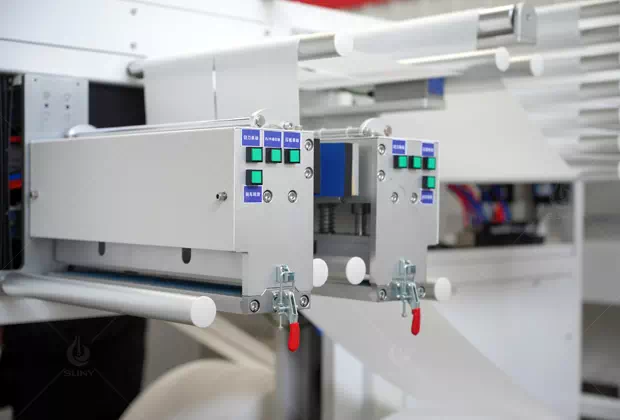
Non-woven fabric is the core raw material for wet wipe production, typically with a basis weight of 35–80 g/m²; common materials include spunlace, flushable, and bamboo fiber non-wovens. Production lines are usually equipped with automatic unwinding systems, tension control systems, and web-guiding devices to ensure the material remains flat and stable during high-speed operation.
For 12-lane or 16-lane high-speed wet wipe machines, operating speeds can reach 6,000 to 12,000 wipes per minute. Unstable tension control can easily lead to issues such as dimensional deviations and folding misalignment. Consequently, high-precision servo control and automatic web-guiding technologies have become essential features of modern wet wipe equipment.
The liquid solution for wet wipes typically consists of purified water, preservatives, humectants, and functional additives. To ensure uniform liquid content across every wipe, production lines are generally equipped with stainless steel mixing tanks, filtration systems, and automatic quantitative liquid dispensing units.
Modern equipment utilizes PLC control to regulate liquid dispensing, keeping the margin of error within ±3%. Products such as baby wipes, disinfecting wipes, and personal care wipes require specific liquid preparation systems tailored to their unique formulas. Automated liquid preparation equipment not only boosts production efficiency but also minimizes formula errors and hygiene risks associated with manual handling.
Once the raw materials are processed, the wipes undergo folding, counting, stacking, and packaging. High-speed machines often integrate functions such as automatic labeling, lid application, seal inspection, and online rejection of defective units to enable continuous production.
Taking an 80-count wet wipe production line as an example, a single 12-lane system can package dozens of packs per minute. Packaging precision directly impacts sealing performance and shelf life; therefore, high-precision servo drives, vision inspection systems, and automatic counting technologies have become key areas of development within the industry.