

How Are Wet Wipes Made
Wet wipes may look simple, but behind every soft, evenly moistened sheet is a highly integrated and automated manufacturing system. The real core of wet wipes production is not just the formula, but the machines that ensure consistency, hygiene, efficiency, and large-scale output. Modern wet wipes manufacturing lines are designed to run continuously, combining material handling, liquid preparation, fabric treatment, cutting, folding, packaging, and quality control into one streamlined process.
The production process begins with nonwoven fabric handling equipment. Large parent rolls of nonwoven material are loaded onto automatic unwinding systems equipped with tension control and edge correction devices. These systems ensure that the fabric moves smoothly and remains flat even at high production speeds. Wet wipes machines are typically compatible with various substrates, including spunlace, wood pulp composite, viscose blends, and synthetic nonwovens, allowing manufacturers to produce different types of wipes on the same line.
At the same time, the liquid preparation system operates independently but in coordination with the fabric line. Stainless steel mixing tanks are used to prepare the wet wipes solution, combining purified water with cleansing agents, moisturizers, preservatives, and optional fragrances. These tanks are fitted with heating, stirring, and filtration systems to ensure uniform mixing and hygienic conditions. Automated control panels manage temperature, mixing time, and ingredient ratios, ensuring stable formulation quality for every batch.
Once the solution is ready, the nonwoven fabric enters the impregnation section of the machine. Depending on the equipment design, the fabric is either fully immersed in the solution or evenly sprayed using precision nozzles. Advanced dosing systems accurately control the liquid content, ensuring each wipe has the same moisture level without dripping or drying out. This step is critical for product performance and user experience.
After impregnation, the treated fabric is guided into the cutting and folding section. High-speed rotary cutters divide the continuous fabric into individual wipes with precise dimensions. Automated folding mechanisms then stack the wipes according to the required format, such as Z-fold, C-fold, or interfold. These operations are synchronized to maintain speed and alignment, even during long production runs.
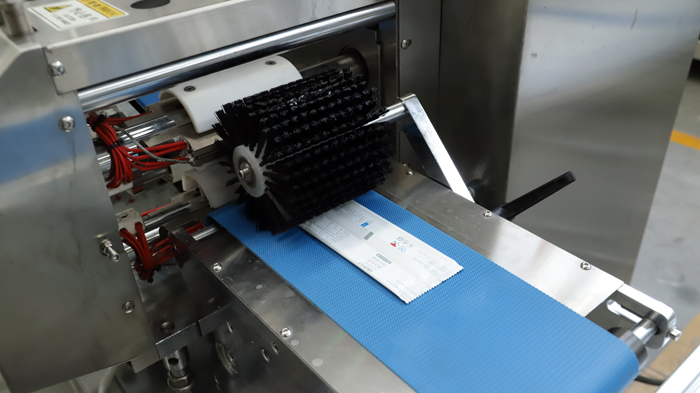
The folded wipes are then transferred to the packaging system. Depending on the product type, the machine can automatically pack wipes into flow packs, soft packs, plastic canisters, buckets, or refill pouches. Heat sealing technology ensures airtight packaging, preventing moisture loss and contamination. Many modern wet wipes machines integrate online inspection systems that monitor weight, count, seal integrity, and overall packaging quality in real time.
Finally, quality control systems play a vital role throughout the entire production process. Sensors, monitoring software, and sampling stations help detect deviations in moisture content, wipe size, or packaging integrity. Only products that meet strict standards proceed to final boxing and shipment.
In summary, wet wipes production is a machine-driven, precision-controlled process. The performance, reliability, and automation level of the manufacturing equipment directly determine the quality, efficiency, and scalability of wet wipes production, making advanced machinery the true foundation of successful wet wipes manufacturing.